Hidden City: Hidden Object
- 4.6
- Rating
- 10.00M
- Installs
- Free
- Price

 Analysis by App-foxy
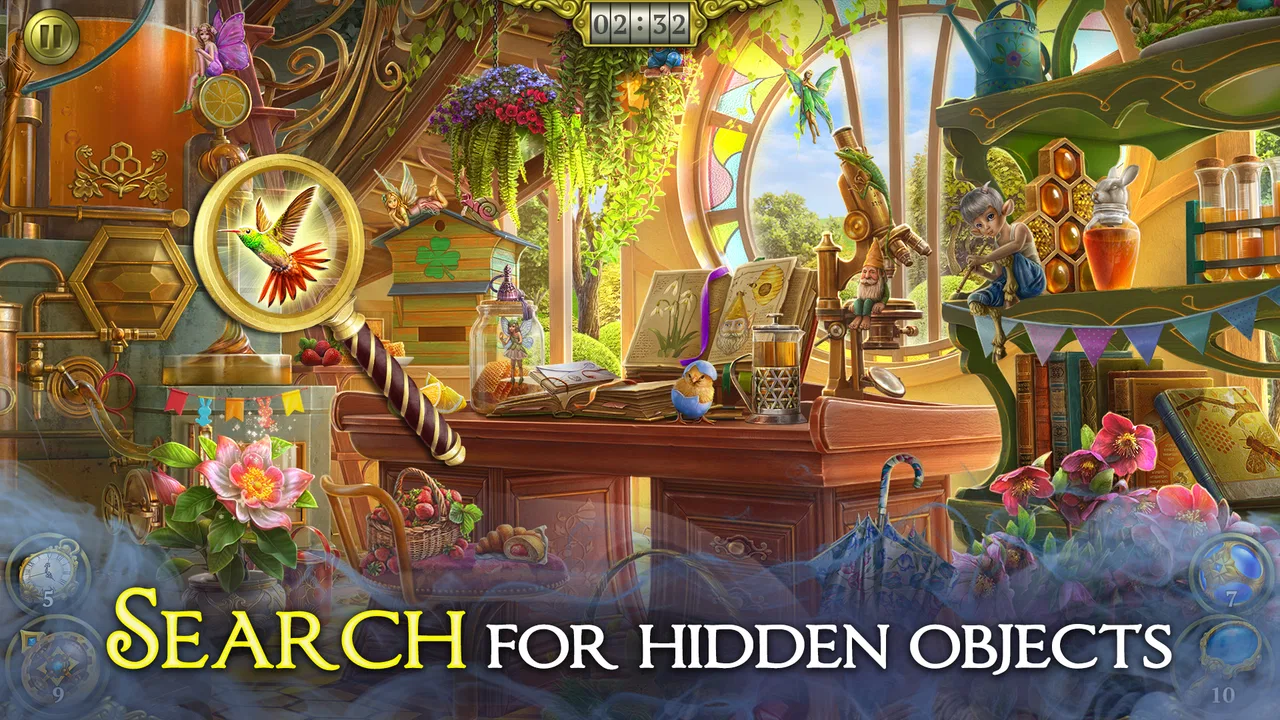
I spent time with Hidden City: Hidden Object as an adventure game built around observation, short puzzles, and an unfolding mystery. It is the kind of experience I can open when I want something calmer than an action game but more purposeful than a simple hidden-picture challenge. The central appeal is easy to understand: search detailed scenes, find objects, work through puzzle activities, and gradually make sense of the strange city surrounding the investigation.
That basic idea sounds familiar, but the presentation gives it more staying power than a collection of disconnected picture puzzles. Each scene asks me to slow down and look carefully, while the surrounding mystery gives those searches a reason to exist. I am not merely tapping random objects to clear a board; I am following a case, collecting clues, and deciding how much attention I want to give the story between searches.
G5 Entertainment developed the game, which sits in the adventure category and is available free of charge. It is rated for Everyone, supports devices running Android 6.0 or later, and the current version is 1.93.9302. Its large audience is reflected in an average rating of 4.5 from around 1.1 million ratings, with over 10 million installs. Those figures do not guarantee that every player will enjoy its pace, but they do show that this particular style of casual investigation has found a substantial audience.
You May Also Like

 Blood Strike: 2.5 Anniversary
Blood Strike’s Loadouts Turn Every Drop Into a Tactical Gamble
A close look at Blood Strike’s custom loadouts: how fast access to signature weapons reshapes its battle royale rhythm, rewards preparation, and narrows the gap between fights.

 Pandora - Music & Podcasts
Pandora’s Music Is Easy to Start, but Harder to Recover
Pandora’s strength is its low-effort path from a seed to a station. Its weak spot is how much confidence it asks you to place in connection, setup, and quiet recovery.

 8 Ball Pool
 Is Built on Rivalries, Rematches, and Routine
A close look at the rivalries, rematches, shared routines, and unanswered safety questions that turn a quick pool match into a persistent mobile community.

 Samsung Music
’s Quiet Strength Is Playing What You Already Own
Its reach comes less from spectacle than from dependable access to a personal library. That simplicity is both the app’s strongest retention engine and its ceiling.

 AccuWeather: Weather Radar
AccuWeather Review: A Quick, Clear Forecast for Everyday Decisions
For everyday plans, the best forecast is the one you can understand quickly. AccuWeather makes rain timing, radar, and local conditions easy to act on, with a few trade-offs.

 Hill Climb Racing
Why Hill Climb Racing Still Turns Crashes Into One More Run
A tiny car, a bumpy hill and one more upgrade: Hill Climb Racing keeps resurfacing because its simple chaos makes every near-miss feel personal.
More From Our News Desk
View All News


How the investigation plays in everyday use
The main loop is deliberately simple to begin with. I enter a location, study the image, and search for the requested objects. Some items stand out immediately, while others blend into patterns, shadows, furniture, or similarly colored surroundings. When the scene is busy, the challenge is less about reflexes and more about building a reliable scanning habit instead of jumping from one attractive detail to another.
I found the most effective approach was to divide each image into zones. I would check the edges first, then move across the center in a slow pattern, returning to areas where an object could be partly hidden. This matters because the game rewards attention rather than speed alone. A quick tap around the screen may occasionally work, but it is a poor long-term method when the requested objects become less obvious.
The hidden-object scenes are supported by puzzle games and mystery tasks, so the experience does not remain visually identical from one activity to the next. That variety is important during a short evening session. If I had to search pictures continuously, the routine would become tiring much sooner. The extra activities create small changes of pace and make the investigation feel like a connected adventure rather than a single repeated test.
A realistic use case is a quiet break after work. I can play one scene while waiting for dinner, stop before the session becomes demanding, and return later when I have more patience for a difficult location. The game suits that stop-and-start rhythm better than an adventure that expects a long uninterrupted session. It also works for players who enjoy noticing visual details but do not want complicated controls or fast combat.
Why the mystery helps the search scenes
The story framework gives the searches a useful sense of direction. I am more willing to revisit a location or spend extra time on a difficult object when the activity feels connected to a larger question. The city setting also helps the game maintain a recognizable identity; the scenes are not presented as random photographs with no relationship to one another.
That said, the mystery is best treated as motivation rather than the sole reason to play. Players who want a deep, choice-driven narrative may find the investigation lighter than expected. The strongest part of the experience is still the act of examining a scene and solving its associated challenge. The story adds context, but it does not turn the game into a conventional role-playing adventure with extensive character control.
This distinction helped me decide when to play. If I wanted a thoughtful visual hunt, the game was a good fit. If I wanted a story that carried the entire experience through dialogue and dramatic decisions, I would choose a different type of adventure. Hidden City works because its narrative and puzzles support each other, not because either one completely replaces the other.
Small habits that make difficult scenes fairer
One useful habit is to read the requested list before tapping anything. Some objects are easier to recognize as a group than in isolation, and remembering the general shape or color prevents me from repeatedly scanning the same area without purpose. I also found it helpful to search for the most visually distinctive item first. That gives me a point of reference and reduces the feeling that the entire scene is equally chaotic.
Another practical tip is to avoid spending every available hint at the first sign of frustration. A hint can rescue a search, but using it immediately removes the satisfaction of learning how the scene hides objects. I prefer to make one complete pass, then inspect likely problem areas, and only then consider assistance. This turns hints into a deliberate resource rather than an automatic shortcut.
Players who use a phone with a smaller display should also expect a different experience from someone playing on a larger screen. Fine details are naturally harder to inspect when the image occupies less space. I found that playing in a quiet environment, with the screen brightness comfortable for my eyes, made more difference than trying to tap faster. The game rewards concentration, so visual comfort is part of the strategy.
A less obvious trade-off is that visual familiarity can work both ways. Once I learn to look for objects that are partially covered or placed where they do not logically belong, I become better at later searches. That learning curve feels satisfying, but it also means the challenge is not purely fresh every time. Some players will enjoy developing this skill; others may prefer puzzles that constantly introduce entirely new rules.
Free access, purchases, and the value of the content
The game is free to download and play, which makes trying it straightforward. I can discover whether the visual style, search pace, and mystery appeal to me without paying at the start. That is the clearest part of its value proposition: the initial commitment is time rather than money.
There are in-app purchases ranging from $0.99 to $99.99 per item. I would therefore approach the game as a free-access experience with optional spending, not as a fully paid adventure whose entire value is settled at purchase. The low end allows a small, occasional purchase, while the high end represents a much more serious commitment. Because individual spending choices depend on how often someone plays and how patient they are, I would set a personal limit before buying anything.
The important question is not simply whether the game costs nothing to start. It is whether the free portion gives me enough enjoyable play to justify continuing. In my experience, the answer depends heavily on tolerance for waiting, repeating searches, and progressing at the game’s intended rhythm. A patient player can get meaningful value from the free entry point. Someone who dislikes any interruption to progress may feel that the free route is less comfortable and may be tempted to spend sooner.
I would not recommend purchasing automatically just because a difficult scene becomes irritating. First, I would ask whether the problem is genuine lack of progress or simply a moment where I have stopped looking methodically. Returning later with fresh eyes often helps more than an immediate purchase. This is especially relevant in a hidden-object game, where frustration can make obvious details disappear from view.
The value also comes from the combination of activities. If I only wanted a single, pure search mode, a one-time paid puzzle game might offer a cleaner and more predictable deal. Here, the free model gives access to a broader adventure structure, with searches, puzzle moments, and mystery progression working together. That breadth is attractive, but it comes with the compromises associated with optional purchases and a longer-term progression model.
Where the game earns its time
The strongest value is in the atmosphere and repeatability of the scenes. I can return for a short session without needing to relearn complicated controls, yet the object placement and visual clutter still demand attention. The game is particularly good at turning a familiar room into a visual question: what belongs here, what is out of place, and where has the requested item been tucked away?
It also delivers value for different session lengths. A brief visit can focus on one search, while a longer session can connect several activities and story steps. That flexibility is more useful than it may sound. I do not need to reserve a full evening to make progress, and I can stop when concentration starts to drop rather than pushing through a demanding action sequence.
Compared with a standard match-three game, the experience feels more investigative and less dependent on rapid pattern matching. Compared with a traditional adventure game, it is easier to pick up but less likely to offer deep exploration or complex control. Against a simple hidden-picture app, it provides more context and variety through its city mystery. The trade-off is that players seeking a short, completely self-contained puzzle may find the broader structure more involved than necessary.
The game is also a better choice for visual thinkers than for players who need constant mechanical novelty. Its pleasure comes from noticing, remembering, and improving your search process. If that sounds relaxing, the repeated format can become pleasantly absorbing. If you need frequent new controls, physical action, or competitive pressure, the same format may feel slow.
Trade-offs that become clear after longer sessions
The biggest limitation is repetition. Even with puzzle variations and story context, much of the time is spent examining scenes for objects. That is the core design, so it is not a flaw that can be removed without changing the game. It becomes a problem only when a player expects every stage to feel radically different.
Longer sessions can also make the visual work tiring. Searching a crowded scene is engaging when I am focused, but less enjoyable when I am already distracted or trying to play quickly. I would rather use this game in shorter blocks than treat it like a marathon. That approach keeps the observation challenge satisfying instead of turning it into screen fatigue.
The free-to-play structure creates another point of friction. The game is easy to sample, but players who want uninterrupted progress may be less comfortable with its purchase options. The correct response is not to assume that spending is required for enjoyment, nor to pretend that every player will be equally happy without it. The sensible choice is to try the free experience, decide whether the pace feels fair to you, and spend only if the added convenience fits your own limit.
There is also a difference between solving and guessing. Tapping randomly can sometimes produce progress, but it does not build the visual skill the game is designed to reward. I enjoyed it more when I treated each scene as an investigation and less when I treated it as a screen to clear as quickly as possible. Players who dislike careful searching should know this before installing; the game will not transform into a fast arcade experience simply because they play more aggressively.
For families, the Everyone rating makes the game broadly approachable, but that does not mean every child will find the hidden-object scenes equally easy. Younger players may need help understanding the object list or recognizing items in a busy image. An adult who enjoys solving together could turn that into a shared activity, while someone looking for an entirely hands-off experience may find the need for concentration less convenient.
Who should choose another kind of game
I would skip this one if my priority were competitive play, fast reactions, open-world movement, or a heavily interactive combat system. The adventure label describes the mystery setting and progression, but the moment-to-moment activity is observation and puzzle solving. Players wanting a conventional action adventure should look elsewhere.
I would also hesitate to recommend it to anyone who strongly prefers a one-time purchase with no optional spending layer. A paid puzzle adventure may be a better fit for that person, even if it offers fewer locations or less ongoing content. The free starting point is useful, but the purchase range means the overall value depends on personal spending discipline and patience.
On the other hand, I would recommend giving it a try if I wanted a low-pressure game for quiet breaks, enjoyed visual details, and liked the idea of a mystery that gives structure to repeated searches. It is especially suitable for players who appreciate gradual progress and do not need every session to deliver a major dramatic event.
My verdict after weighing the value
Hidden City: Hidden Object is a worthwhile free adventure game for the right kind of player. Its best qualities are the detailed searches, the sense of investigation created by the city setting, and the ability to fit naturally into short or medium-length sessions. I like that it asks me to observe rather than react, and I appreciate having puzzle activities and mystery progression to break up the central search loop.
Its limitations are equally clear. Repetition is unavoidable, extended searches can be tiring, and the optional purchase structure will not suit everyone. I would not install it expecting a deep action adventure or a fully linear story experience. I would install it expecting a patient visual puzzle game with a continuing mystery and a free entry point.
If I were recommending it to a friend, I would say: try the free version, play slowly, and decide based on whether the search process itself feels rewarding. Use a careful scanning pattern before relying on hints, and set a spending boundary before any purchase becomes tempting. With those expectations, the game offers genuine value without requiring an immediate commitment.
For me, the final decision is a download for fans of hidden-object adventures and relaxed mystery games, but a skip for players who need constant action or a simple one-time price. The Everyone rating, Android 6.0 minimum, and broad device availability make it approachable, while its established audience suggests that the format has lasting appeal. I would judge it less as a replacement for every other adventure game and more as a focused, atmospheric choice for moments when I want to slow down and look closely.
FAQs for Hidden City: Hidden Object
01What is the primary objective of Hidden City: Hidden Object?
Hidden City: Hidden Object is a mystery adventure game where players explore various locations to find hidden objects and solve puzzles. The main goal is to uncover clues and unravel the mysteries of the city. Each scene has a list of items to locate, which helps progress the storyline.
02Is Hidden City: Hidden Object free to play?
Yes, Hidden City is free to download and play. However, it offers in-app purchases for items like energy, hints, and special items that can enhance gameplay. While you can enjoy the game without spending money, these purchases can help speed up progress and unlock additional features.
03What are the system requirements for Hidden City on mobile devices?
Hidden City: Hidden Object requires iOS 9.0 or later for Apple devices and Android 4.0.3 and up for Android devices. It’s essential to have a stable internet connection and adequate storage space, as the game features high-quality graphics and frequent updates. Check your device’s compatibility before downloading.
04Does Hidden City require an internet connection to play?
Yes, Hidden City requires a stable internet connection to play. The game frequently updates with new content and events, necessitating online connectivity. Additionally, certain features like friends' interactions and leaderboard participation are only available when connected to the internet.
05Can progress in Hidden City be synchronized across multiple devices?
Yes, you can sync your game progress across multiple devices by connecting the game to your Facebook account. This feature allows players to continue their adventure seamlessly on any compatible device, ensuring that your progress, achievements, and purchases are preserved.
Pros
- Engaging storyline with frequent updates.
- Stunning graphics and detailed environments.
- Variety of puzzles to keep gameplay fresh.
- Social features add a collaborative element.
- Regular events and challenges enhance replayability.
Cons
- Can be too reliant on in-app purchases.
- Energy system limits playtime length.
- Some puzzles may feel repetitive.
- Requires a stable internet connection.
- Large file size may be an issue for some devices.

Hidden City: Hidden Object
Gallery